By Perrin Grauer. Originally posted on ECU News.
The artist and recent MFA grad is among five artists selected for the museum’s new exhibition celebrating contemporary Northwest Coast Indigenous art.
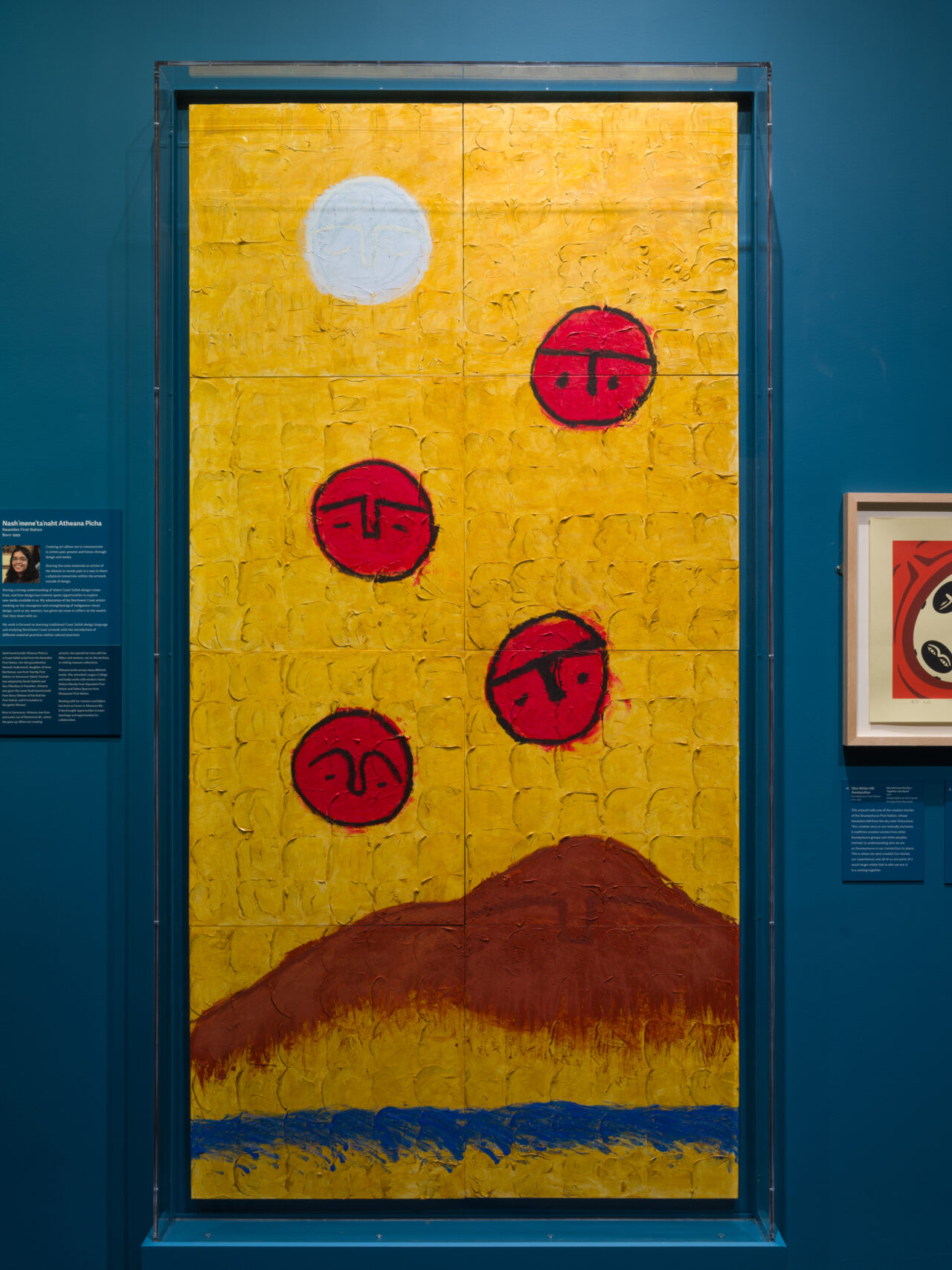
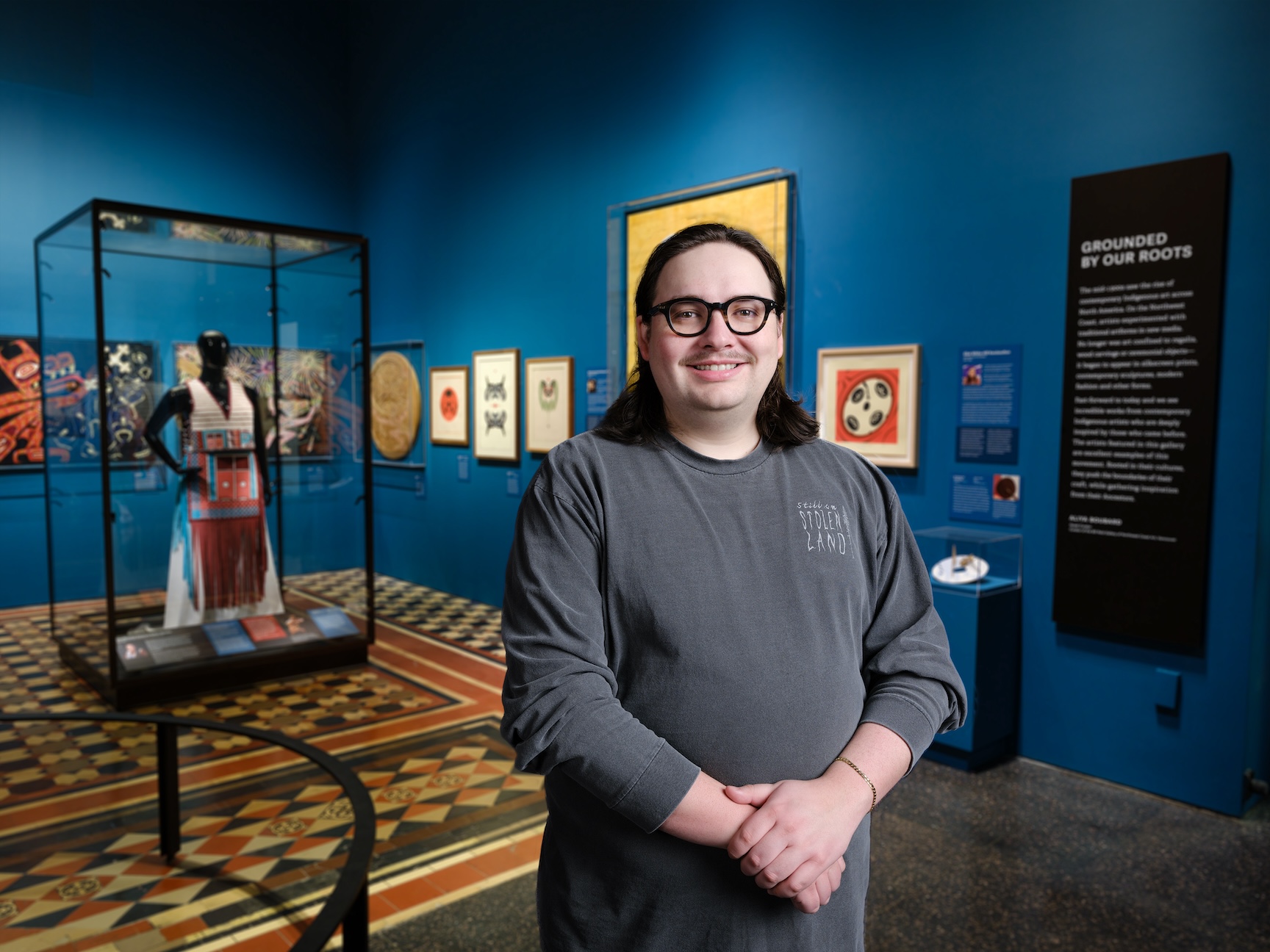
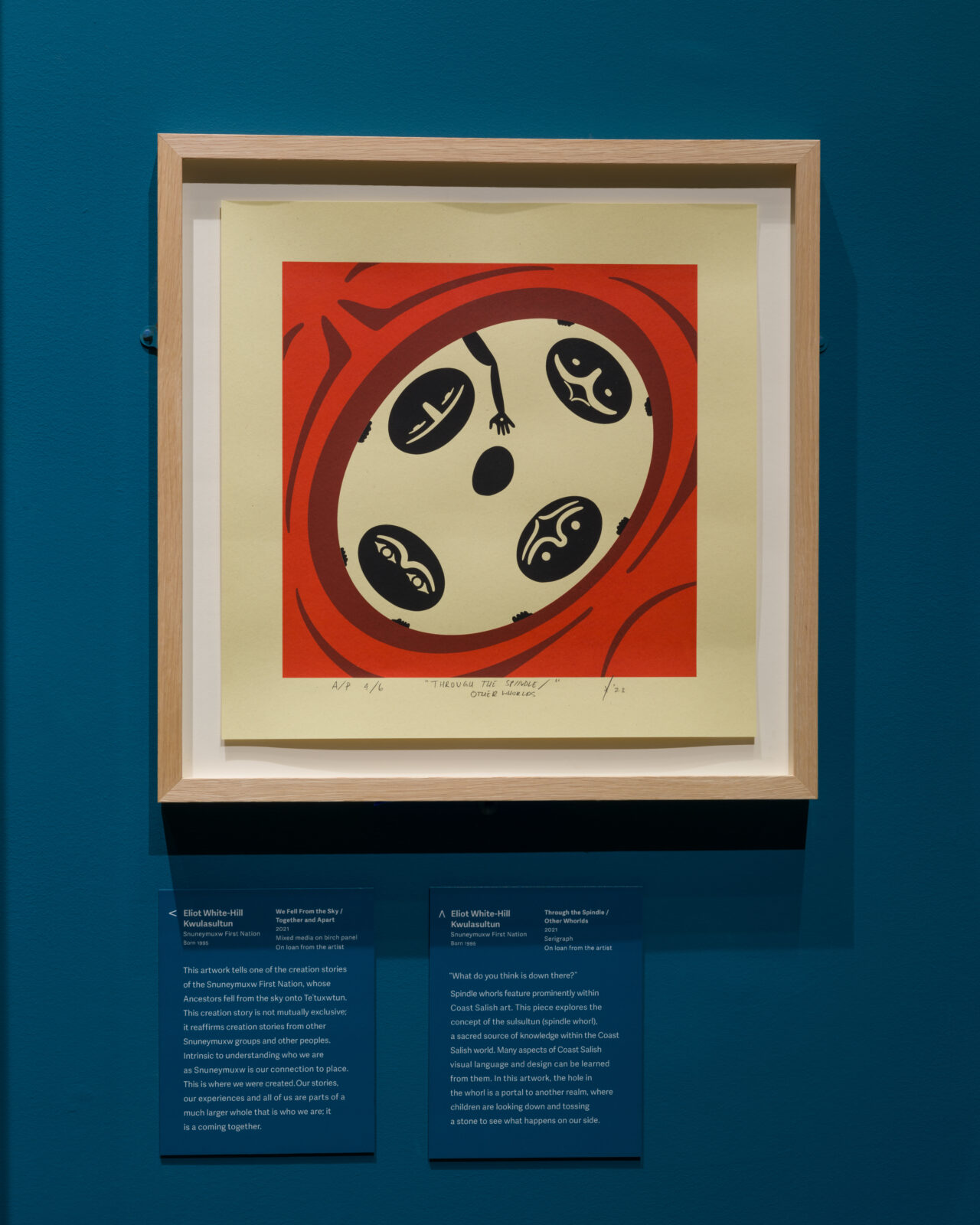
Artist Eliot White-Hill, Kwulasultun (MFA 2023) is one of five Northwest Coast artists participating in a new exhibition at the American Museum of Natural History (AMNH) in New York City, NY.
Eliot, who is Coast Salish from Snuneymuxw First Nation and also traces his roots to Spune’luxutth and Hupač̓asatḥ First Nations, calls the feeling of showing in the storied museum’s Northwest Coast Hall “surreal.”
“It’s such an honour to have my art on display here, to be asked to be here, to be representing myself and my family and my community in this way,” he says via phone from New York. “It’s also a complicated feeling because the objects in the Northwest Coast Hall, for the most part, did not arrive in New York City in a good way. They should be back home where they belong.”
Titled Grounded by Our Roots, the show also features works by Hawilkwalał Rebecca Baker-Grenier (Kwakiuł, Musgamagw Dzawada’enuxw, Skwxwú7mesh), Alison Bremner Naxhshagheit (Tlingit), SGidGang.Xaal Shoshannah Greene (Haida) and Nash’mene’ta’naht Atheana Picha (Kwantlen First Nation).
Eliot says he feels honoured to show alongside this group of brilliant artists, some of whom he already knows personally. Shoshannah, for instance, is a close friend with whom Eliot often spends time drawing or watching films in Vancouver. He notes one of his works in the AMNH show was created during his final year in the Emily Carr MFA program.
Over a few days in New York, Eliot spoke with journalists and attended an opening ceremony with museum board members, staff and other museum associates. He was also able to spend time in the archives, which he says contain one of the world’s most significant collections of Northwest Coast art.
Many of the items in the archive are no longer on public display. New regulations, passed earlier this year under the Native American Graves Protection and Repatriation Act, require federally funded institutions to obtain permission from Indigenous Nations to display remains and cultural objects. This spurred the AMNH to close two halls dedicated to Indigenous cultures of North America and cover cases containing Indigenous artifacts.
In the archives, Eliot was able to hold a small carving that had been taken from his home community more than a century ago, which he says was both profound and painful. Meanwhile, his work in the Northwest Coast Hall shares space with a pair of potlatch screens that were made by his ancestors on Vancouver Island.
“It’s a complex feeling because they should be in Port Alberni with my family,” he says. “But I hope that my art being there can offer healing to those potlatch screens that have been in New York for over a hundred years now.”
Read the full story on ECU News.